On this page
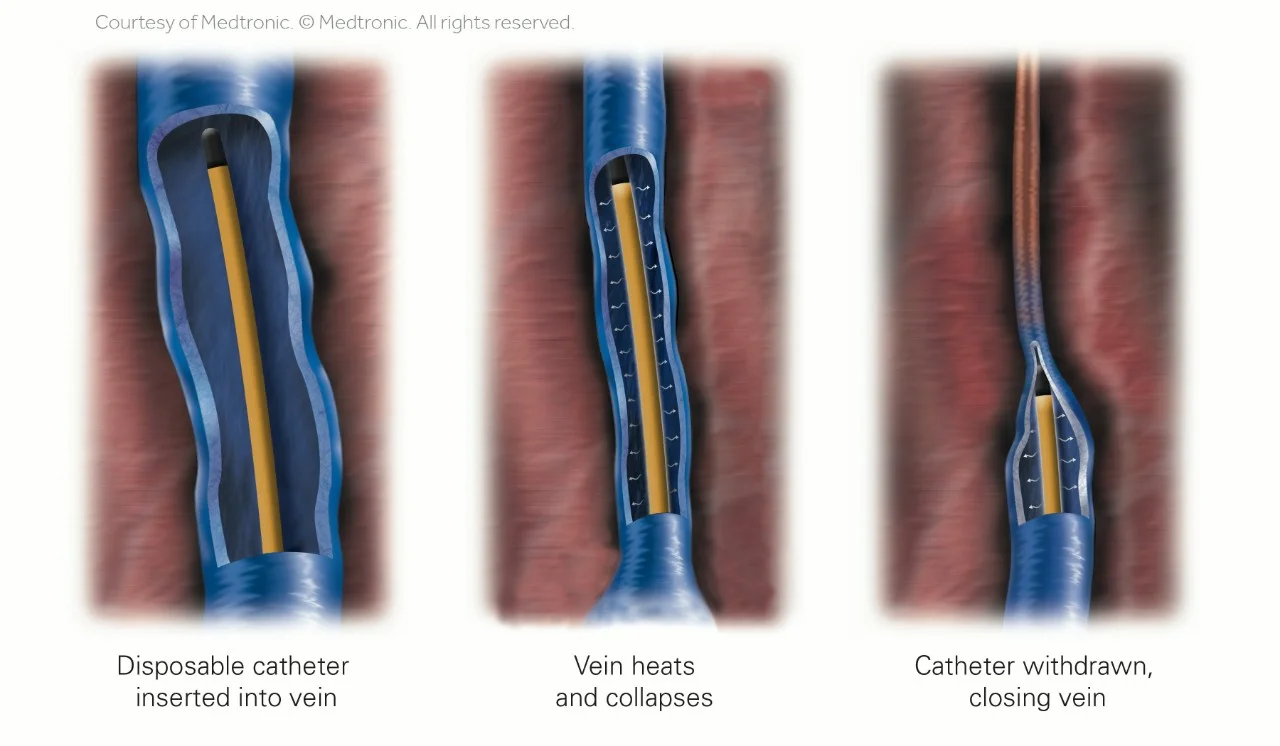
VenaSeal and ClosureFast are minimally invasive options for selected patients with superficial venous reflux. ClosureFast seals the vein using radiofrequency heat; VenaSeal uses a medical adhesive. Both have benefits and potential complications, and an evaluation helps determine whether either treatment fits your condition and goals.
How ClosureFast works
ClosureFast is radiofrequency ablation: a thin catheter delivers controlled heat that closes the diseased vein from the inside. Because heat is involved, the procedure uses tumescent anesthesia — numbing fluid injected along the vein — to protect surrounding tissue. Potential complications include bruising, temporary numbness or nerve irritation, and, less commonly, skin burns, blood clots, or infection. Your specialist will explain how these risks apply to your anatomy.
How VenaSeal works
VenaSeal closes the vein with a small amount of medical adhesive that remains in the body permanently. It doesn't use heat, so tumescent anesthesia isn't needed. The main considerations are specific to the adhesive: it isn't appropriate for patients with a known hypersensitivity to cyanoacrylate adhesives, and some patients develop a temporary inflammatory reaction along the treated vein. Certain acute inflammatory or infectious conditions also rule it out.
Side by side
| ClosureFast | VenaSeal | |
|---|---|---|
| How it closes the vein | Radiofrequency heat | Medical adhesive (permanent implant) |
| Anesthesia | Tumescent (numbing fluid along the vein) | Local at the access site only |
| Key risk differences | Heat-related: nerve irritation, rare skin burns | Adhesive-related: hypersensitivity, inflammatory reaction |
| Compression stockings after | Often recommended; individualized | Often not required; individualized |
| Insurance coverage | Varies by plan; see our insurance guide | Varies by plan; see our insurance guide |
| Return to activity | Typically quick; your instructions are individualized | Typically quick; your instructions are individualized |
Procedure time in the treatment room is not the same as total time in the office — plan around the office's instructions for your visit.
How the choice is made
Ultrasound mapping of your veins is a key input, but it isn't the whole decision. Your medical history, any adhesive sensitivity, your preferences, and what your insurance covers all factor in. In some cases neither device is the right answer — conservative management or a different procedure may fit better. That conversation is the point of the consultation.
Frequently asked questions
What if I have an adhesive allergy?
Tell your specialist. Known hypersensitivity to cyanoacrylate adhesives rules out VenaSeal; ClosureFast or other options can be discussed instead.
Will I need compression stockings?
It depends on the procedure and your case. Compression is commonly advised after thermal ablation; VenaSeal patients often need less. Follow your own post-procedure instructions.
Could I need additional treatment?
Possibly. Follow-up ultrasound confirms the vein closed, and some patients need treatment of additional veins over time. Vein disease can also develop in new areas.
Weighing your options? Request a vein evaluation to discuss the treatments appropriate for you, or call (561) 408-0304.
This article is general health information, not medical advice, and does not replace an evaluation by a clinician. If you think you are having an emergency, call 911.
Related articles
 Leg & vein health
Leg Swelling That Won't Go Away: When to Seek Care
Persistent leg swelling can have several causes. Learn the urgent warning signs, when to seek care, and how a vascular evaluation may help. Leg & vein health
Leg Wound Not Healing? Causes of Venous Ulcers
A leg wound that won't heal needs prompt assessment. Learn how venous ulcers are recognized and why compression, wound care, and vein treatment work together. Leg & vein health
Leg Pain When Walking: Could It Be PAD?
Leg pain when walking can have several causes, including PAD. Learn the warning signs, how circulation is checked, and when to seek care.